 Fossick Map
What you’ll be able to do
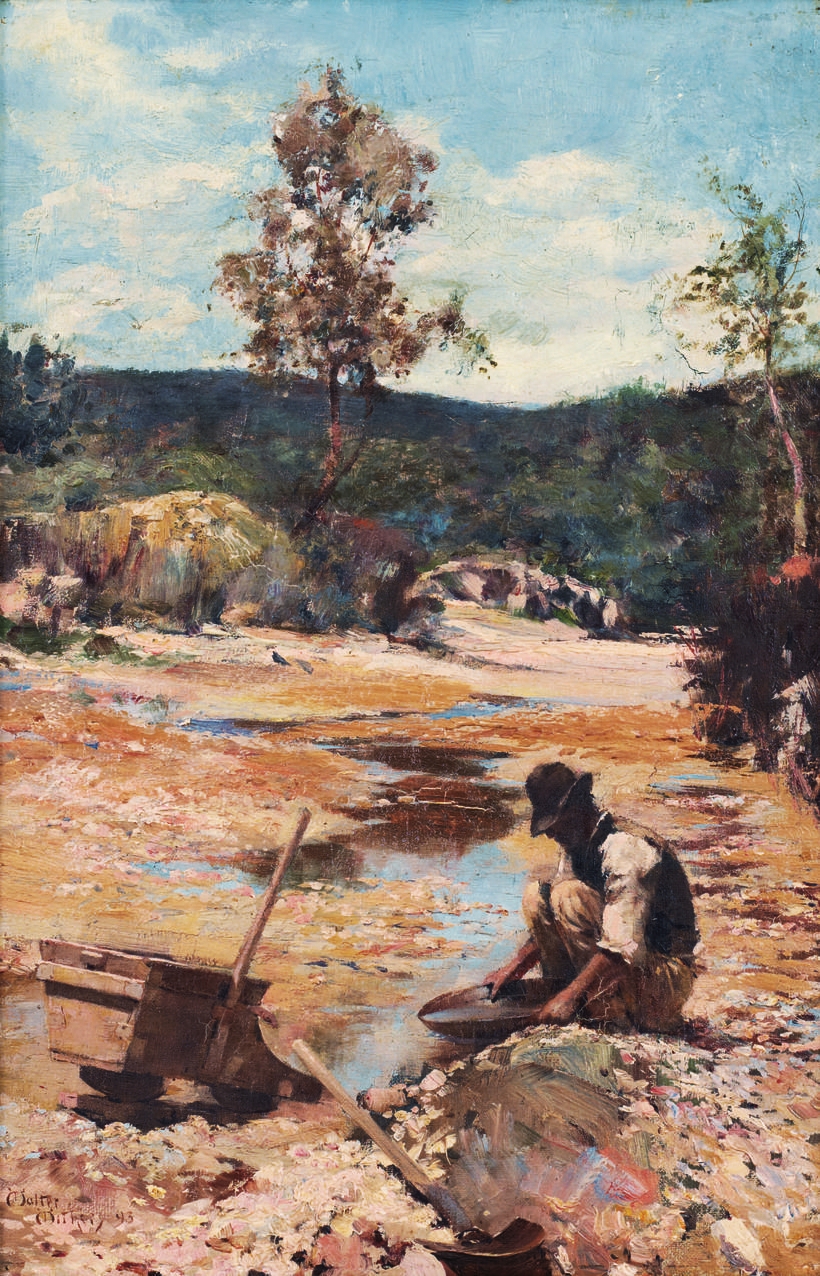
By the end of this guide you’ll know how to wash a pan of creek gravel down to the heavy material in the bottom, and spot the gold in it. You’ll need a pan, a creek where you’re allowed to pan, and in Queensland and Victoria a licence. Expect fine flecks of gold, not nuggets.
Do you need a licence?
It depends on the state, and on whose land you’re on.
| State | What you need to pan for gold | Official source |
|---|---|---|
| Queensland | A fossicking licence, in all fossicking areas. Hand tools only, and you can’t dig deeper than 0.5 m in a stream | Licences, rules |
| Victoria | A Miner’s Right, which lasts 10 years. Under-18s don’t need one if they’re with an adult who has one | Recreational prospecting |
| NSW | No licence, but you need the landholder’s consent on private land and a permit in State forests. Fossicking is generally not allowed in national parks | Guide to fossicking in NSW |
| Tasmania | No licence inside the 11 declared fossicking areas, but none of them is listed for gold. Anywhere else you need a prospecting licence | Mineral Resources Tasmania |
Prices are on each state’s official page.
The gear
| Item | What to look for |
|---|---|
| Pan | A gold pan. Many have riffles, ridges along one side that help catch gold |
| Sieve | One that sits over your pan, so the big stones never go in |
| Scoop | A small shovel or trowel |
| Bucket | For carrying gravel to the water |
| For your gold | A small vial, filled with water |
All four states limit you to hand tools, so no pumps, powered sluices or dredges.
No creek water where you’re digging? The Northern Territory’s panning guide suggests carrying about 10 litres of water, with a large dish to hold it and a small one to pan in. Pour the water back into the large dish after each pan and reuse it.
Why it works
Gold is heavy: over nineteen times heavier than water, according to Geoscience Australia. When you shake a pan of wet gravel, the heavy material settles to the bottom and the light material rises, where you wash it away. Panning is that, over and over, until only the heaviest material is left.
What’s left at the bottom is the heaviest material in the pan, often a dark layer that fossickers call black sand. That’s where any gold will be.
The steps
These steps follow the Northern Territory Government’s panning guide. The drawings are ours.
-
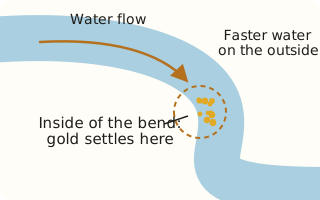 Find the right spot. Gold settles where the water slows down: on the inside of creek bends and in hollows in the creek bed. In a dry creek, dig down to the bedrock and pick the gravel out of the cracks in it.
-
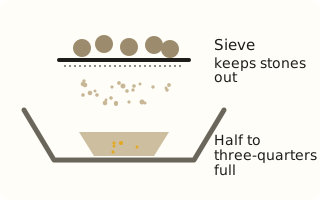 Sieve it into the pan. The sieve keeps the big stones out. Fill the pan half to three-quarters full.
-
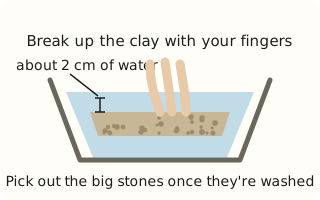 Cover it with water and break it up. Put about 2 cm of water over the gravel, rub the clay apart with your fingers until it's all dissolved, and pick out the big stones once they're washed clean.
-
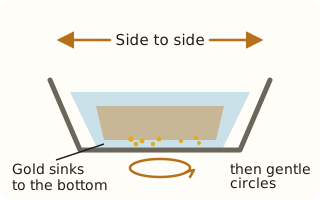 Shake it. Stir the gravel round with your hand, then give the pan a few firm shakes side to side and back and forth, without slopping anything out. Finish with gentle circles. Do this two or three times. The light material rises and the heavy material, gold included, sinks.
-
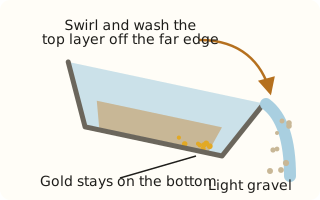 Tilt and wash off the top. Tilt the pan slightly away from you and swirl it side to side with a small forward toss, so the water carries the top layer over the edge. Wipe the stones off the surface with your hand. Add water, shake again and wash again, until only about a cup of heavy material is left.
-
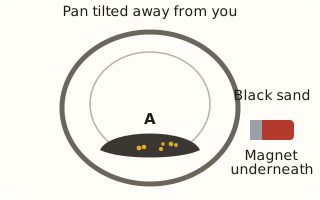 Gather it into a heap. Add a little water, keep the pan tilted away, and shake it gently back and forth until the material forms a small heap. If there's a lot of black sand, run a magnet in circles under the pan to draw it away from any gold.
-
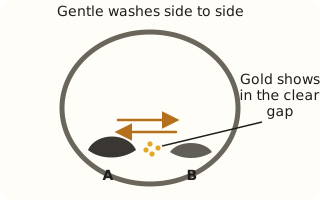 Wash across the heap. Wash water gently side to side over the heap, a little at a time, moving it across the pan and keeping a clear gap in the middle. Gold specks show up in that gap. A couple of drops of dishwashing detergent in the water helps on this last pan.
-
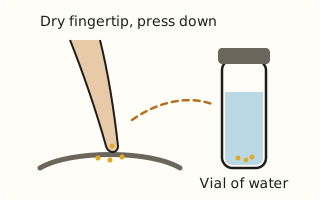 Pick up the gold. Dry your fingertip on your clothes, press it down hard on a speck, and drop the speck into your vial of water.
When you’re finished, fill in your holes before you leave. Queensland and Tasmania require it.
The mistakes beginners make
- Rushing the shaking. If the gold hasn’t had time to settle, it washes out with the gravel.
- Panning where the water runs fast. Gold only settles where the water is too slow to carry it on.
- Mistaking fool’s gold for the real thing. Fool’s gold is pyrite, and it often forms neat little cubes. Gold is soft, so it flattens or bends when you press it instead of breaking.
- Digging the banks. Undermining a creek bank is against the rules in Queensland and Tasmania, and it’s banned outright at places like Deep Creek in Gympie. Stick to the creek bed.
Where to practise
- Deep Creek, Gympie: a public fossicking area on the edge of town, pan only, with a gold rush story behind it.
- Not ready for a creek? Some fossicking parks dig the material for you, so you just grab a bucket and start sieving. In Queensland you don’t need a licence at a site that charges entry.