 Fossick Map
The licence
You need a Queensland fossicking licence wherever you fossick, and you must carry it. There are two exceptions: tourist mines and sites that charge an entry fee, and using a metal detector to look for treasure or lost items.
| Licence | Fossicking licence, individual or family, for 1 month, 6 months or 1 year |
| Family | Covers the licence holder, a spouse, and children or students under 23 who live at home |
| Where to buy | Online through MyMinesOnline, or from an authorised agent or a Mines Assessment Hub. Prices are on the licence page |
Where to go
Queensland has more than 40 official fossicking areas, in six regions. They are all on the map below, with what you’ll find at each and a link to its official page and map. The 12 Clermont gold areas share one pin.
| Region | Areas | What you’ll find |
|---|---|---|
| Central Queensland gemfields, around Sapphire, Rubyvale and Anakie | Sapphire, Rubyvale, Scrub Lead, Divide, Reward, Glenalva, Middle Ridge, Big Bessie, Graves Hill, Tomahawk Creek, Willows | Sapphire, ruby and zircon |
| Clermont gold district | 12 general permission areas, most north-west of Clermont | Gold, by panning or dry blowing |
| Capricorn | Mount Morgan No 7 Dam reserve | Gold |
| Northern Queensland | Agate Creek, Bar-Barrum, Lava Plains, Mount Gibson, Young’s Block, O’Briens Creek, Moonstone Hill | Topaz, agate, thunder eggs, moonstone, sapphire and gold |
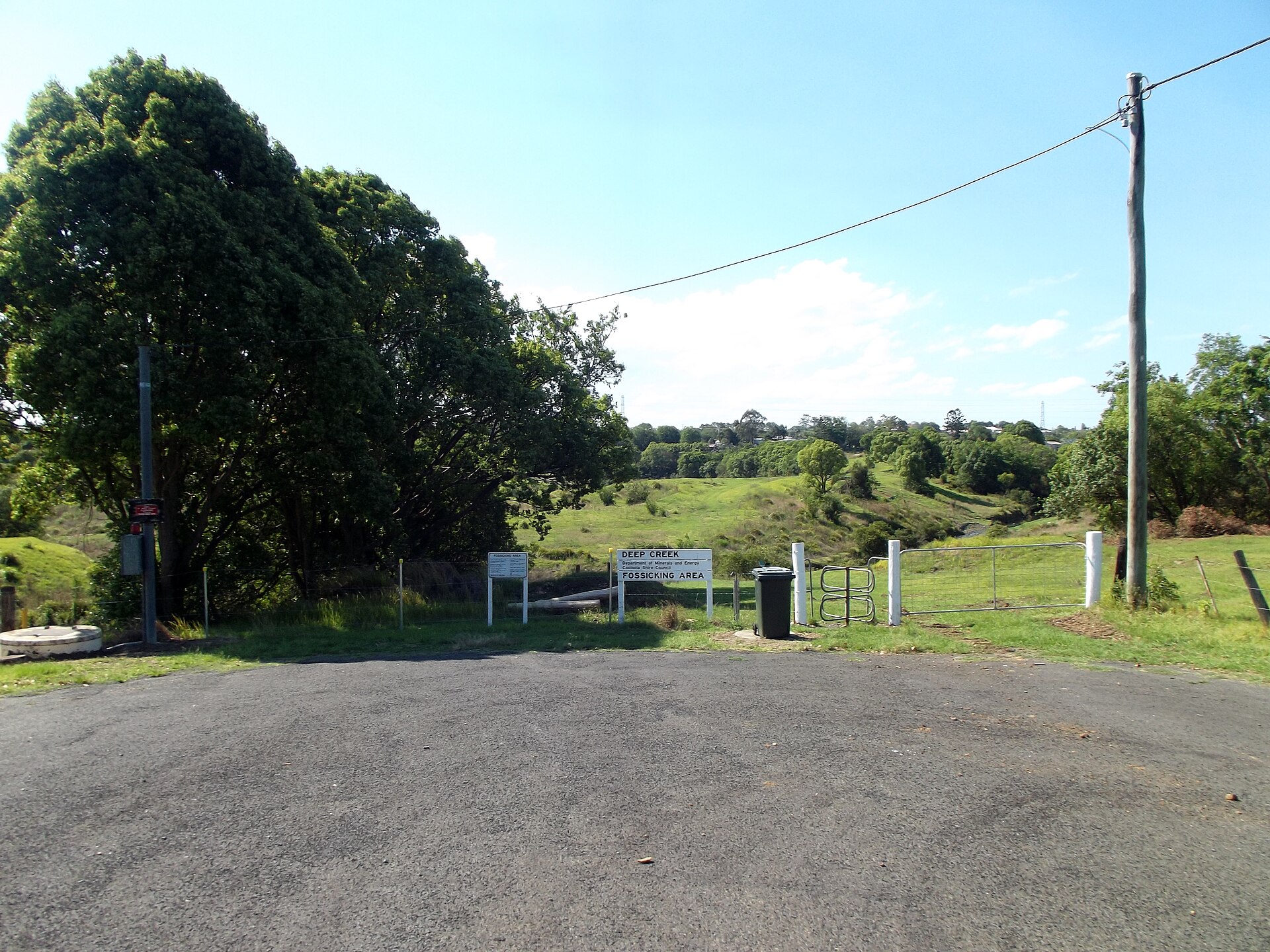
| South-east Queensland | Deep Creek at Gympie, Thanes Creek, Talgai and Durikai state forests near Warwick, Swipers Gully near Stanthorpe, Chinchilla | Gold near Warwick and Gympie, topaz near Stanthorpe, petrified wood near Chinchilla |
| Western opal fields | Yowah, Duck Creek and Sheep Station Creek near Quilpie, Opalton near Winton | Opal, including Yowah nuts and boulder opal |
Some areas have their own conditions. At Bar-Barrum you notify and pay a fee before you go. At the Chinchilla petrified wood sites you pay the landowner’s entry fee at the visitor centre. At Deep Creek in Gympie you can only pan in the creek bed. Read the area’s own page before you set out.
New to the gemfields? Start with our guide to Sapphire and Rubyvale. Not sure what you’re looking for? See what each find looks like, raw and cut, further down this page.
Before you go
- Get your licence, and keep it on you.
- Check the land. If you’re not in an official fossicking area, find who owns the land on GeoResGlobe: turn on the Cadastre, Native title and Administrative boundaries layers. A title search gives you the landholder’s name. Get their consent in writing before you dig.
- Read the area’s page and map, including any special conditions.
- Check the weather and the roads. In the western opal fields, the best time to go is April to September. Summer heat and heavy rain can cut the roads.
- Pack for the bush: enough food, water, fuel and spares, a well-stocked first-aid kit, and a phone or other way to call for help. Several areas have no water supply, so bring your own.
- Tell someone your plans, including when you expect to be back. In an emergency, call 000, or 112 from a mobile.
What you can use and collect
- Tools: hand tools only, including picks, shovels, hammers, sieves, shakers, hand sluices and metal detectors. No machinery, which rules out pumped sluices and dredges of any kind.
- Depth: no deeper than 2 m on land, or 0.5 m in a stream. No overhangs or tunnels.
- Road reserves: no digging. You can only pick up what’s on the surface.
- What you can keep: gemstones, ornamental stones, mineral specimens, alluvial gold (nuggets included) and some fossils. Meteorites and vertebrate fossils are off limits.
Where you can and can’t fossick
| Land | Can you fossick? |
|---|---|
| Official fossicking areas | Yes, with your licence |
| Private land, leases and other land | Only with the landholder’s written consent, as well as your licence |
| State forests | Only in general permission areas |
| National parks, conservation parks and wildlife reserves | No |
Camping on the fields
You can camp on some fossicking areas with a separate fossicking camping permit, for up to 3 months at one area. The camping page names Duck Creek, Sheep Station Creek, Opalton, and Divide, Reward, Rubyvale, Sapphire and Scrub Lead in the gemfields. Several other gemfield areas’ own pages also allow camping with a permit, so check the area’s page. Many areas don’t allow camping at all.
A camping permit doesn’t let you fossick: you still need your licence.
Rules and safety
- Refill every hole before you leave.
- Never go into old underground workings.
- Wear eye protection when you break rocks.
- No firearms or explosives.
- Stay on existing roads and tracks. No cross-country driving.
- Bury human waste at least 20 cm deep and 20 m from the bank of any creek.